
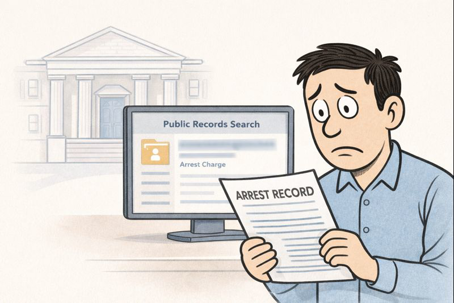
One of the most common and stressful questions people ask after a domestic violence arrest is whether they now have a criminal record. For many people, the arrest comes as a shock. They have never been in trouble before, they may not understand how the system works, and they are immediately worried about their job, their reputation, and their future. Understanding how criminal records work in South Carolina can help clear up some of that confusion.
What happens to your record after a domestic violence arrest
In South Carolina, a criminal record is created almost immediately after an arrest. As soon as someone is booked into jail, that arrest information is reported to state and national criminal records databases. This happens before any court date, before guilt or innocence is determined, and before a lawyer has the chance to challenge the case.
In many counties, including Lexington County and Richland County, jail booking information is also made publicly available. This information can include a person’s name, date of birth, the charge, and sometimes a booking photo. These jail records are often detected quickly by background check companies and so-called mugshot websites. Once collected, that information can show up in employment screenings, rental applications, and online searches.
Court records are also public
In addition to jail records, South Carolina maintains a centralized public court index. Most magistrate, municipal, and general sessions cases appear on this system. If you are arrested for domestic violence, the pending case will usually appear on the public index with your name, address, and the specific criminal charge listed.
This means that a domestic violence arrest is not private. Even if the case is still pending and no conviction has occurred, the arrest and the court case are often easy for others to find. This is one of the reasons why domestic violence charges can feel so overwhelming, especially for people who have never dealt with the criminal justice system before.
Is an arrest the same as a conviction?
It is important to understand the difference between an arrest record and a conviction. After an arrest, you do have a criminal record, but it is a record of the arrest, not a finding of guilt. An arrest alone does not mean you are guilty of domestic violence. Everyone charged with a crime is presumed innocent unless and until they are convicted in court.
That distinction matters legally, but in the real world, employers and others reviewing background checks do not always understand or appreciate the difference. A pending domestic violence charge can still raise concerns, even though the case has not been resolved.
When can an arrest record be erased
South Carolina law allows for expungement in many situations. Expungement is the legal process that removes publicly available government records of an arrest or charge. When an expungement is granted, the record is removed from state and national criminal databases and from the public court index.
A domestic violence arrest can be expunged if the underlying criminal charge is dismissed. There are several ways a domestic violence case can be dismissed. A prosecutor may voluntarily dismiss the charge. A case may be dismissed after successful completion of Pre Trial Intervention, also known as PTI. A dismissal may occur as part of a plea agreement to a different charge. A case may also be dismissed if you go to trial and are found not guilty, or if the court dismisses the charge for a legal reason.
In these situations, an expungement can be applied for to erase the arrest and charge from public records. This can be an important step in protecting your future employment and reputation.
Why pending domestic violence cases can be especially damaging
Even before a case is resolved, a pending domestic violence arrest can cause serious problems. Many employers run routine background checks. Some professional licenses require disclosure of pending criminal charges. Landlords and financial institutions may also rely on background screening companies that report arrests and open cases.
Domestic violence charges are often viewed more harshly than other offenses because of their nature. A conviction can have long-term consequences, including a permanent criminal record, firearm restrictions, and enhanced penalties for any future allegations. This makes it especially important to take these cases seriously from the beginning.
The importance of a defense strategy
There are many strategies that can help increase the likelihood of a successful outcome in a domestic violence case. This applies to all levels of domestic violence charges in South Carolina, including DV 3rd Degree, DV 2nd Degree, DV 1st Degree and DVHAN.
An effective defense may involve challenging the evidence, examining the credibility of witnesses, reviewing body camera footage, identifying legal or procedural issues, or exploring alternatives that could lead to dismissal. Each case is different, and the right approach depends on the specific facts and circumstances involved.
Getting legal advice early matters
If you have been arrested for domestic violence, it is important to get accurate information early. Many people make decisions based on fear or misinformation they find online. Speaking with a lawyer can help you understand whether dismissal or expungement may be possible and what steps can be taken to protect your record.
The Law Office of James R. Snell, Jr., LLC, represents people charged with misdemeanor and felony domestic violence offenses throughout South Carolina. James Snell has over 20 years of experience defending domestic violence cases and is the author of Challenging CDV, the book on South Carolina Criminal Domestic Violence Defense.
If you are facing a domestic violence charge and are concerned about your criminal record, we recommend contacting our office for a free initial consultation. Same day consultations are usually available. To schedule an appointment, call (803) 359-3301.
All cases are unique, and prior results obtained by the attorney in one matter do not indicate similar results can be obtained for other clients in other matters.