
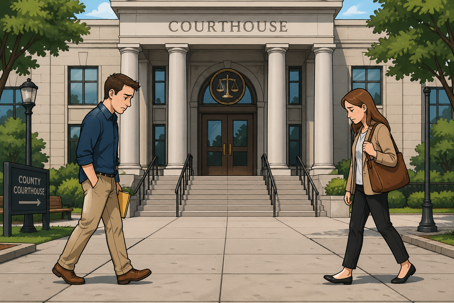
Being charged with Domestic Violence 3rd Degree in Columbia, South Carolina can be overwhelming. You may be dealing with a no-contact order, removal from your home, and upcoming court dates, all while trying to understand what happens next.
If you or a loved one has recently been arrested for DV 3rd in Columbia, SC, it is important to understand your rights and the legal process so you can make informed decisions about your case.
We regularly represent clients charged with domestic violence offenses throughout Columbia and Richland County, including DV 3rd cases in Central Court and Columbia Municipal Court. Many of these cases involve highly emotional situations, misunderstandings, or allegations made in the heat of the moment.
What Is Domestic Violence 3rd Degree in South Carolina?
Domestic Violence 3rd Degree is defined under S.C. Code § 16-25-20. In order to convict someone of DV 3rd, the government must prove two key elements.
First, there must be a “household member” relationship between the accused and the alleged victim. This includes people who are married, formerly married, have children together, or are currently or were formerly living together.
Second, the government must prove that the accused caused physical harm, attempted to cause physical harm, or threatened to cause physical harm.
These cases are often based on limited evidence, and many involve conflicting statements or lack independent witnesses.
Who Decides Whether Charges Are Prosecuted?
One of the most common misconceptions is that the alleged victim can “drop” the charges.
In South Carolina, criminal charges are brought by the State, not the alleged victim. This means that even if the alleged victim wants the case dismissed, the prosecutor can still move forward with prosecution.
However, the alleged victim’s wishes and credibility can still play an important role in how the case is handled.
What Happens After a DV 3rd Arrest in Columbia, SC?
After an arrest for DV 3rd in Columbia, several things typically happen quickly.
You will have a bond hearing, often within 24 hours. At that hearing, the court may impose conditions of release, including a no-contact order.
In many cases, you may be required to have no contact whatsoever with the alleged victim. This can include phone calls, texts, social media, or even indirect contact through other people.
Your case will then be assigned to a court based on the arresting agency. Most DV 3rd cases in Columbia are handled in either Central Court located at 2500 Decker Blvd. or Columbia Municipal Court located at 811 Washington Street, depending on whether the arrest was made by the Richland County Sheriff’s Department or the City of Columbia Police Department.
You will receive a court date, and the case will begin moving through the system. The timeline can vary depending on the court and whether the case is resolved early or proceeds toward trial.
What Is a No-Contact Order and Can It Be Removed?
A no-contact order is one of the most significant consequences of a DV 3rd arrest. This order can prevent you from returning or living at home, or communicating with your partner or spouse about household matters or childcare.
This order typically prohibits any communication with the alleged victim, even if they want to speak with you. Violating this order can result in new criminal charges and additional bond violations. For example, if the alleged victim calls you and you answer the phone and talk then you could be held in violation of the order and returned to jail.
In some cases, it may be possible to request that the court modify or lift the no-contact order. This is not automatic and usually requires a formal motion and court approval. This is something we regularly assist our clients in requesting- and can start this process immediately upon being retained upon request.
What Are the Possible Penalties for DV 3rd?
DV 3rd Degree is a misdemeanor offense in South Carolina. If convicted, you can face up to 90 days in jail, fines and court costs, mandatory domestic violence counseling, firearm restrictions under federal law, and a permanent criminal record that can impact employment and housing.
Even though it is classified as a misdemeanor, the long-term consequences can be serious.
Can DV 3rd Charges Be Dismissed?
Yes, DV 3rd charges can be dismissed under the right circumstances.
Dismissals often depend on issues such as lack of evidence, inconsistent statements, or credibility problems. In some cases, the alleged victim may not wish to cooperate, which can affect the strength of the prosecution’s case.
However, dismissal is never automatic, and each case must be evaluated based on its specific facts. As a general rule, the “no drop” policy will prohibit the prosecutor from dismissing a case simply because the alleged victim requests doing so.
Even when cases are not dismissed, they can be contested in trial to seek a not-guilty verdict.
Common Defenses to DV 3rd Charges
Every case is different, but there are several defenses that frequently arise in DV 3rd cases.
These may include self-defense, lack of physical injury or credible threat, false or exaggerated allegations made during an argument, lack of a qualifying household member relationship, cases based solely on conflicting statements with no independent evidence, or statements made under the influence of alcohol or emotional distress.
Many DV 3rd cases fall into a “he said / she said” category, which can create significant challenges for the prosecution.
What Are the Possible Outcomes in a DV 3rd Case?
There are several possible ways a DV 3rd case can be resolved.
The most favorable outcomes include a dismissal of charges or a not guilty verdict after trial.
Other possible resolutions include entry into the Pre-Trial Intervention (PTI) program. Successful completion of PTI can result in dismissal of the charge and eligibility for expungement.
In some cases, the charge may be reduced to a lesser offense, such as disorderly conduct or a non-domestic violence offense.
We believe that you should never accept PTI or a plea agreement unless you are sure that doing so is in your best interests.
The least favorable outcome is a conviction with the maximum sentence imposed.
Will DV 3rd Stay on Your Record?
If you are convicted of DV 3rd, the conviction will be placed on your criminal record. In some cases you may be able to request it to be removed after 5 years. However, if you already have a criminal record or you obtain new charges after the DV 3rd conviction the record may be permanent.
If your case is dismissed or resolved through PTI, you may be eligible to have the arrest expunged from your record. This can be an important factor in protecting your future employment and background checks.
How Long Does a DV 3rd Case Take in Columbia?
The timeline for a DV 3rd case depends on several factors, including the court handling the case and whether it is resolved early.
Cases that are dismissed, resolved through PTI, or handled through a plea agreement are typically completed more quickly.
Cases that proceed to trial will usually take longer due to court scheduling and preparation.
Do You Need a Lawyer for DV 3rd in Columbia, SC?
While you are not required to hire a lawyer, having an experienced criminal defense attorney can make a significant difference in how your case is handled.
An attorney can help evaluate the evidence, identify defenses, negotiate with prosecutors, and guide you through decisions such as whether to accept a plea offer or proceed to trial.
Early involvement can also be important in addressing bond conditions, including no-contact orders.
Frequently Asked Questions About DV 3rd in Columbia, SC
Can the alleged victim drop the charges?
No. Only the prosecutor can dismiss the case, although the alleged victim’s wishes may be considered, their decision is not binding on the prosecutor or the court. Many domestic violence cases continue to be prosecuted even after the alleged victim requests dismissal.
If a no contact order applies, can I talk to the alleged victim in an emergency or if they reach out to me first?
No. If a no-contact order is in place, any contact can result in additional charges. This is even in situations which there is a sudden emergency, or if the alleged victim reaches out to you first. Prohibited contact can include in-person, telephone, email, text message or any other method of communication.
Is DV 3rd a felony?
No. It is a misdemeanor, but it still carries serious consequences. This includes possible high fines, mandatory counseling, jail time, loss of firearm rights under state and federal law, and a criminal record.
Can I go back home after being charged?
Not if “no contact” or “do not return to the incident location” bond restrictions were put in place. If so then it is is important to follow, and to discuss the procedures to seek removing those with our office. If you violate any bond conditions it can result in your bond being revoked, requiring you to remain in jail until the conclusion of your case. If you do return home it is important than you are avoid any further contact with law enforcement regarding domestic violence allegations, and you avoid obtaining any new criminal charges during the pendency of your case.
What happens if the alleged victim changes their story?
This can impact the case, but it does not automatically result in dismissal. It’s not unusual in domestic violence cases for alleged victims to change or recant their story, and this fact by itself may not be considered significant to the prosecutor. It can however be very significant to the court if a case is taken to trial.
Can I own a firearm after a DV conviction?
A conviction will result in federal firearm restrictions. This can be avoided if the case is dismissed, referred into pre-trial intervention, or you are found not-guilty after a trial. In some cases the bond court may impose a restriction against possessing firearms during the pendency of the case. This restriction would be included on the written bond order if applicable.
Speak With a Columbia, SC DV 3rd Defense Lawyer
If you or a loved one has been charged with Domestic Violence 3rd Degree in Columbia, SC, it is important to get clear answers about your situation as soon as possible. Criminal defense attorney James R. Snell, Jr., has over 20 years experience defending clients charged with domestic violence offenses, and regularly represents clients in Columbia, SC. He is also the author of the book, Challenging CDV, which is the book on the topic of criminal domestic violence defense in South Carolina.
At the Law Office of James R. Snell, Jr., LLC, consultations are confidential and give you the opportunity to discuss your case one-on-one with a criminal defense attorney. During that meeting, we can review the charges, explain your options, and help you understand the best path forward.
Call (803) 359-3301 today to schedule a consultation. Same-day appointments are typically available.
Disclaimer
All cases are unique. Prior results do not guarantee a similar outcome in any future case.