
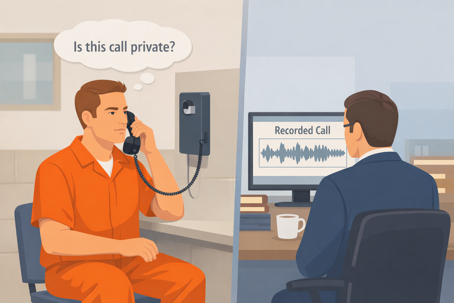
If you or a loved one has been arrested in South Carolina, one of the most important things to understand is this: every jail phone call is recorded.
That applies across the entire state, including facilities such as the Lexington County Detention Center and the Alvin S. Glenn Detention Center in Columbia.
What you say on those calls can and will be used against you.
Every Call Is Recorded and Reviewed
Jails throughout South Carolina routinely record outgoing inmate phone calls. These calls are not private and are not protected.
Law enforcement officers and prosecutors have access to these recordings and can review them at any stage of a case. In many situations, they actively monitor calls while preparing for bond hearings or trial.
These recordings are often preserved and organized. If something important is said, it may become a central piece of evidence.
This applies to both misdemeanor and felony charges, including domestic violence, DUI, criminal sexual conduct, sexual exploitation of a minor, and even murder.
Jail Calls Can Become Public
Many people are surprised to learn that jail phone calls can also become public.
In high-profile cases in South Carolina, recorded jail calls have been released to the media and published online, including on platforms like YouTube.
Once released, those recordings can be heard by anyone. This can affect not only the outcome of the case, but also a person’s reputation, relationships, and future.
Jail Calls Can Lead to New Charges
Jail phone calls do not just affect the current case. They can create entirely new legal exposure.
If there is a no-contact condition as part of a bond, a single phone call to a prohibited person may result in bond revocation.
If an inmate asks a witness to change their story or avoid cooperating, that conversation may lead to an obstruction of justice charge.
If a call involves discussion about hiding or disposing of evidence, the person on the outside of the jail could face charges such as accessory after the fact.
There are many other possible ways the contents of a recorded jail phone call could create significant legal problems for both the inmate, and the person on the other end of the line.
These situations happen more often than people expect, and they can significantly increase the stakes in a criminal case.
Talking About Your Case Can Seriously Hurt You
One of the most common and damaging mistakes is discussing the case over the jail phone.
Even casual conversations can be used as evidence. Trying to explain what happened, guessing about evidence, or attempting to “clear things up” often makes things worse.
In some cases, people even discuss what they plan to say in court. That gives the prosecution insight into potential defenses before the case even begins.
What Families and Friends Need to Know
If your loved one is in jail, it is critical to understand that these calls are not private for you either.
You should avoid saying anything, or encouraging them to say anything, that you would not want law enforcement or the prosecutor to hear. Many people on the outside assume the risk only applies to the person in custody. That is not the case.
The contents of jail phone calls are frequently cited by prosecutors in pre-trial bond motions and are often used as evidence at trial. What is said on a call can directly impact whether someone remains in custody or is released.
In addition to phone calls, many jails now use electronic messaging systems that allow inmates to send and receive text-style messages or emails. These systems may feel more private, but they are not.
Those messages are monitored, stored, and routinely reviewed, and they can also be used as evidence in court.
The safest approach is simple. Keep conversations limited to basic support and logistics. Avoid discussing the facts of the case, witnesses, or anything related to the alleged offense.
The Bottom Line
If you are in jail in South Carolina, you should assume that every word you say on the phone or in a message is being recorded, reviewed, and potentially used as evidence.
What may feel like a private conversation is anything but private.
Speak With a Lawyer Before You Speak
If you or a loved one has been charged with a crime in Lexington, Columbia, or anywhere in South Carolina, it is important to get legal advice as early as possible. The Law Office of James R. Snell, Jr., LLC, provides criminal defense representation in Lexington, Columbia and throughout South Carolina.
Call (803) 359-3301 today to schedule a consultation. Same-day appointments are often available.
Every case is different. The outcome of any case depends on its specific facts, and prior results do not guarantee a similar result in future cases.