
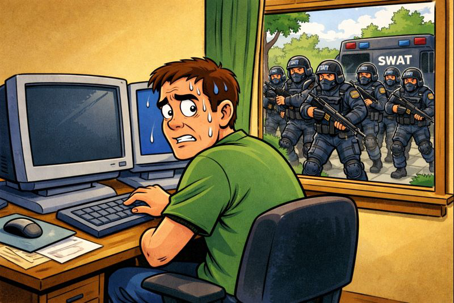
Being arrested for sexual exploitation of a minor in South Carolina is one of the most frightening and overwhelming experiences a person or family can face. These cases often come out of nowhere. Law enforcement may arrive unannounced, seize computers and phones, and ask questions that feel impossible to answer in the moment. People are often left confused about what they are accused of doing, what degree of charge applies, and what their future may look like.
One of the very first questions we hear during consultations is what is the difference between 3rd degree and 2nd degree sexual exploitation of a minor. Understanding that distinction is critical, because both charges are felonies, both carry life-changing consequences, and the difference between them can affect potential penalties, defenses, and strategy moving forward.
This article explains how South Carolina law defines these offenses, how investigations typically begin, why people are often charged with both degrees, and why an arrest is not the end of the story.
Sexual Exploitation of a Minor Is a South Carolina State Charge
Sexual exploitation of a minor is a South Carolina state criminal offense. It is not a federal charge, although federal agencies may sometimes be involved in task force investigations. The offense makes it illegal to possess, distribute, or transmit images or videos of underage minors engaged in sexually explicit conduct.
Today, law enforcement and prosecutors commonly refer to this material as Child Sex Abuse Material, or CSAM. This terminology applies to both images and videos. Even a single file can form the basis of a criminal charge, and multiple files can lead to multiple counts.
The two most common charges people face are sexual exploitation of a minor in the 3rd degree and sexual exploitation of a minor in the 2nd degree. It is not unusual for someone to be charged with both at the same time.
Overview of 3rd Degree Sexual Exploitation of a Minor
Sexual exploitation of a minor in the 3rd degree generally involves allegations of possession. Under South Carolina law, a person may be charged if they knowingly possess images or videos that meet the legal definition of CSAM.
This charge focuses on what is found on a device. That device could be a computer, phone, tablet, external hard drive, or other digital storage. Prosecutors do not need to prove that the person created the images or shared them with anyone else. Possession alone can be enough.
A conviction for 3rd degree sexual exploitation of a minor is a felony. The possible sentencing range is zero to ten years in prison. There is no mandatory minimum prison sentence, but incarceration is a possibility. This offense also requires mandatory sex offender registration.
Because each image or video can be charged separately, possession cases can quickly multiply into many counts. This is one of the reasons these cases feel so overwhelming to people who have never had any prior contact with the criminal justice system.
Overview of 2nd Degree Sexual Exploitation of a Minor
Sexual exploitation of a minor in the 2nd degree is more serious under South Carolina law. This charge relates to allegations of distribution or transmission of CSAM. In modern cases, this frequently involves the Internet.
Uploading images or videos to cloud storage, sending files through messaging platforms, or transmitting content through social media can all lead to 2nd degree charges. Even automatic uploads or syncing features on devices can become part of the allegation.
Unlike 3rd degree, 2nd degree sexual exploitation of a minor carries mandatory prison time. The sentencing range is two to ten years in the South Carolina Department of Corrections. If someone is convicted, the judge must impose at least two years of incarceration. Like 3rd degree, this offense also requires mandatory sex offender registration.
The mandatory minimum makes these charges especially frightening. Many people believe that an arrest automatically means they will go to prison. That is not necessarily true, even in serious cases.
Why People Are Often Charged With Both 3rd and 2nd Degree
It is common for prosecutors to charge both 3rd degree and 2nd degree sexual exploitation of a minor in the same case. This happens because possession and transmission often overlap.
For example, if images are found stored on a device, that may support 3rd degree charges. If those same images were uploaded to an online account or transmitted through an Internet service, that transmission may be charged as 2nd degree.
Each image or video can support a separate count. This means that a single investigation can result in numerous felony charges, even for someone with no prior criminal record. The charge for the Internet upload or distribution is 2nd degree, and then if any videos or photographs are found, there will be additional charges of 3rd degree.
How These Investigations Usually Begin in South Carolina
Most sexual exploitation of a minor investigations in South Carolina start with a report from an Internet service company. Companies such as Google, Facebook, and other online platforms use automated systems to detect suspected CSAM being uploaded, shared, or stored on their servers.
When a system flags suspected material, the company reports it to law enforcement. Investigators then seek information about the account involved, including identifying data and activity history. Law enforcement works to determine which Internet Service Provider was used and who the account holder is.
Once investigators identify a physical address, they typically seek a search warrant. Officers then go to that location to seize electronic devices and attempt to question the suspect.
These search warrant executions can be intense. It is not unusual for numerous officers to arrive, sometimes wearing body armor and carrying rifles. The sudden presence of law enforcement can be terrifying for everyone in the home, especially when it comes without warning.
What Happens During the Search and Interrogation
During a search warrant, law enforcement will seize electronic devices they believe may contain evidence. Officers often attempt to interrogate the suspect at the same time. Anything said during this interrogation can be used as evidence.
Many people try to explain themselves, minimize what happened, or cooperate out of fear. Unfortunately, statements made in these moments frequently become a major part of the prosecution’s case.
It is important to understand that you have the right to remain silent and the right to refuse consent to searches beyond what the warrant authorizes. Exercising those rights cannot be used against you in court.
Mandatory Prison Time Does Not Mean the Case Is Hopeless
While 2nd degree sexual exploitation of a minor carries mandatory prison time upon conviction, an arrest or even strong evidence does not mean the outcome is predetermined. There are still opportunities to challenge the case, negotiate with prosecutors, and seek resolutions that avoid incarceration.
Legal defenses may include whether statements made to law enforcement were legally obtained, whether search warrants were valid, or whether the materials in question actually meet the legal definition of CSAM. In some cases, images alleged to be illegal are not, in fact, illegal under the law.
Intent also matters. These offenses cannot be committed accidentally. The law requires that the conduct be intentional. This can become a critical issue in certain cases involving shared devices, multiple users, or automated processes.
In many cases, we also work with a forensic psychologist to demonstrate that our client is not a threat to children or the community. This additional step can play a meaningful role in negotiations with prosecutors and in court proceedings.
What to Do If You Are Under Investigation or Have Been Arrested
Anyone who believes they may be suspected of sexual exploitation of a minor, or who has been contacted by law enforcement, should not answer questions, make statements, or consent to searches. These decisions can have permanent consequences.
It is essential to speak with a criminal defense attorney as early as possible. Early involvement can make a significant difference in how the case unfolds. We can help you if you are under investigation and seek to minimize the risk of an arrest or conviction.
Statewide Defense of Sexual Exploitation of a Minor Charges in South Carolina
Our office defends clients facing sexual exploitation of a minor and other Internet Crimes Against Children Task Force cases throughout South Carolina. This includes Greenville, Myrtle Beach, Charleston, Beaufort, Columbia, and Lexington. We offer free consultations, and same-day appointments are usually available. You can call us at (803) 359-3301 to discuss your situation confidentially.
All cases are unique. Prior results obtained by an attorney in one matter do not indicate or guarantee similar results can be obtained for other clients in other matters. If you or a loved one is facing these charges, getting accurate information and legal guidance early is critical.