
South Carolina Shoplifting Lawyer
Shoplifting is one of the most common criminal charges we are contacted about. Although some people assume shoplifting is a "minor offense," a conviction can have serious and lasting consequences. Even a first offense can result in substantial fines, possible jail time, and, perhaps most importantly, a criminal conviction that may negatively affect employment opportunities, professional licensing, housing applications, educational opportunities, and background checks.
A shoplifting charge begins when law enforcement either arrests you or issues you a Uniform Traffic Ticket (UTT), which often resembles a traffic ticket. Regardless of how you receive the charge, we recommend consulting a criminal defense attorney before going to court. There are often defense strategies and legal options available that may help you avoid a conviction or obtain a more favorable outcome.
The Law Office of James R. Snell, Jr., LLC, represents clients charged with misdemeanor and felony shoplifting in Columbia, Lexington and throughout South Carolina. Criminal Defense attorney James Snell has over 20 years experience, and offers free consultations. To schedule your appointment call us at (803) 359-3301.
What Is Shoplifting Under South Carolina Law?
South Carolina's shoplifting law is found in S.C. Code § 16-13-110. In general, the law makes it a crime to alter, transfer, or otherwise manipulate merchandise offered for sale with the intent of depriving the merchant of its full retail value.
Examples of conduct that may result in shoplifting charges include:
- Concealing merchandise.
- Switching or altering price tags.
- Leaving a store without paying for merchandise.
- Failing to properly scan merchandise at a self-checkout register.
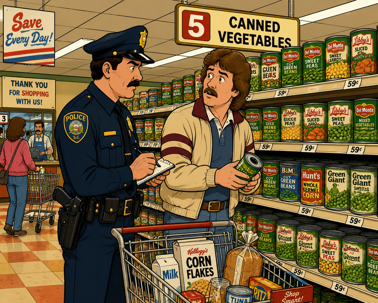
It is important to understand that intent is a required element of the offense. Accidentally forgetting to pay for an item on the bottom of a shopping cart or making an honest mistake at a self-checkout register is not automatically a crime. However, people can still be arrested or charged in these situations. Being accused by a store or charged by law enforcement does not necessarily mean you will ultimately be convicted.
Being Charged Is Not the Same as Being Convicted
You have been charged with shoplifting if you have been arrested or issued a citation by law enforcement. You are not convicted unless you plead guilty, plead no contest, or are found guilty after a trial.
Many shoplifting cases can be resolved without a conviction. Depending on the facts, it may be possible to obtain a dismissal, negotiate a reduction in the charge, or participate in a diversion program. Our goal is to help clients avoid criminal convictions whenever possible. While no lawyer can promise or guarantee any specific outcome in a criminal case, we will not hesitate to fight your case in court if it is not dismissed or reduced to your satisfaction.
Shoplifting Penalties in South Carolina
The penalties for shoplifting depend upon several factors, including the value of the merchandise and whether someone has prior convictions.
Many first-offense shoplifting cases involving lower-value merchandise are prosecuted as misdemeanors in Municipal or Magistrate Court. More serious cases may be prosecuted in the Court of General Sessions. First offense cases can result in fines of over $2,000 and\or up to thirty days in the county jail. Allegations of theft of higher value merchandise can result in a felony charge.
In addition, South Carolina law allows certain shoplifting charges to be enhanced to a felony under S.C. Code § 16-1-57 when the accused has two or more prior convictions for qualifying property crimes. Importantly, this enhancement is based upon a person's criminal history rather than the value of the merchandise involved in the new case.
A felony shoplifting enhancement carries a maximum penalty of ten years in prison and is prosecuted in the Court of General Sessions.
South Carolina also has separate laws addressing organized retail crime involving coordinated thefts or retail theft rings.
Evidence Commonly Used in Shoplifting Cases
Every case is different, but prosecutors commonly rely upon evidence such as:
- Store surveillance video.
- Testimony from store employees or loss prevention officers.
- Self-checkout transaction records (there are many examples, including Wal-Mart Self-Checkout cases).
- Receipts and inventory records.
- Police body camera footage.
- Statements allegedly made by the accused.
The quality and reliability of this evidence varies from case to case. One of the most important parts of preparing a defense is carefully reviewing all available evidence.
How We Help With South Carolina Shoplifting Defense
We represent clients charged with shoplifting throughout Columbia, Lexington, and elsewhere in South Carolina.
The first step is scheduling a free consultation. During this meeting, you will have the opportunity to tell your story, ask questions, and learn about the legal process. We will review the allegations, discuss possible defenses, explain what to expect in court, and help you determine the best course of action.
Possible resolutions to a shoplifting charge include:
Dismissal
Law enforcement or the prosecutor may decide to dismiss the charge. In some cases, this occurs with the agreement of the store or merchant.
Pre-Trial Intervention (PTI)
Many first-time shoplifting charges qualify for South Carolina's Pre-Trial Intervention (PTI) program. PTI is a diversion program available for many misdemeanor offenses and some General Sessions charges.
After successful completion of PTI, the criminal charge is dismissed, and in many situations the arrest record can be expunged.
Plea Agreement
Some cases are resolved through negotiated plea agreements. This may involve pleading guilty or no contest to either the original charge or a reduced offense in exchange for a more favorable sentence or disposition.
Whether accepting a plea agreement is in your best interest depends upon the specific facts of your case.
Trial
Every person charged with shoplifting has the constitutional right to a trial.
At trial, the prosecution must present evidence proving guilt beyond a reasonable doubt. If the court finds you not guilty, the charge will be dismissed, and you may be eligible to have the arrest removed from your record. If you are found guilty, the judge may impose fines, jail time, or other penalties, and the conviction will become part of your criminal record.
We believe any decision to plead guilty or enter a diversion program should only be made after carefully evaluating all available legal options.
Frequently Asked Questions About Shoplifting
I think I am guilty. Can a lawyer still help me?
Yes.
Many people charged with shoplifting believe they are guilty. That does not necessarily mean there are no options available.
Depending upon the facts, prosecutors may agree to dismiss or reduce charges, or you may qualify for Pre-Trial Intervention (PTI). Even when the evidence appears strong, an attorney can often negotiate with prosecutors, identify legal issues, and help you pursue the best possible resolution.
Even if you believe you committed the offense, it is worthwhile to consult a lawyer before your court date.
I was with someone who shoplifted, but I did not steal anything.
Simply being present when someone else commits a crime does not automatically make you guilty.
South Carolina recognizes the legal principle of "mere presence." Just because you were shopping with someone, rode to the store together, or happened to be nearby does not necessarily mean you committed shoplifting yourself.
If you believe you have been falsely accused, there may be legal defenses available.
Will a shoplifting conviction stay on my criminal record?
A conviction generally becomes part of your South Carolina criminal record and may appear on background checks. First offense misdemeanor convictions may be eligible for expungement after 3 years. Other convictions may be on your record forever. Depending on how your case is resolved, you may qualify for an expungement. Diversion programs such as PTI frequently provide opportunities to have eligible records erased after successful completion. A dismissal or a not-guilty finding by the court will also qualify you for an expungement.
Can shoplifting charges be dismissed?
Yes. Some shoplifting charges are dismissed because of insufficient evidence, witness issues, legal defenses, participation in diversion programs, or agreements reached with the prosecutor. Every case is unique, and the available options depend on the specific facts.
What if I accidentally forgot to pay for something?
Honest mistakes happen. Forgetting to scan an item or overlooking merchandise in the bottom of a shopping cart is not automatically a crime. However, stores or law enforcement may still issue a citation or make an arrest. An attorney can help evaluate whether the evidence actually establishes criminal intent.
I never left the store. Can I still be charged with shoplifting?
Yes. You are not required to leave the store, or pass checkout lanes, in order to be charged with shoplifting. Any handling of merchandise inside the store with the intent to steal can be enough to be charged.
Contact a South Carolina Shoplifting Attorney
If you have been charged with shoplifting in Lexington, Columbia, or anywhere in South Carolina, do not assume a conviction is inevitable. Many cases can be resolved through dismissal, diversion programs, negotiated resolutions, or trial. The best strategy depends on the facts of your case, the available evidence, and your criminal history.
Contact the Law Office of James R. Snell, Jr., LLC today at (803) 359-3301 to schedule your free consultation. Same-day appointments are typically available.
Disclaimer: The information contained on this page is provided for general informational purposes only and should not be considered legal advice. Every case is unique, and prior results obtained by the attorney in one matter do not guarantee or predict similar results in any future case.