
Does My Child Need a Lawyer for a School Expulsion Hearing in South Carolina?
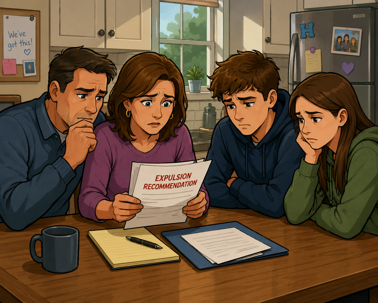
If your child has been recommended for expulsion from a South Carolina public school, you may be wondering whether you need to hire a lawyer for the expulsion hearing.
South Carolina does not require parents to hire an attorney for a school expulsion hearing. However, state law specifically gives parents the right to have legal counsel present at the hearing.
Whether you should hire a lawyer depends on the circumstances. If your child is facing the possibility of being removed from school, accused of serious misconduct, or potentially charged with a crime arising from the same incident, speaking with an attorney before the hearing may be worthwhile.
Parents in Lexington, Columbia, and surrounding areas should also understand that an expulsion hearing is more than an informal meeting with school administrators. South Carolina law provides students and parents with important procedural rights that can affect how the hearing is handled and what evidence can be presented.
What Happens When a Student Is Recommended for Expulsion?
A recommendation for expulsion does not necessarily mean that your child has already been expelled.
Typically, an incident occurs at school or at a school-related activity, the school investigates what happened, and an administrator determines that the alleged conduct may warrant expulsion.
Parents should receive written notification concerning the recommendation and hearing.
The notice is important. Do not assume that the hearing is simply an opportunity for the school to explain a decision that has already been made. The hearing is an opportunity for the student and parents to respond to the allegations and present their side of the case.
A recommendation for expulsion is just that, a recommendation. It is up to the district hearing officer to determine whether a school rule was violated, and if so, what the sanction should be. While this could include expulsion, lesser sanctions such as alternative school or a return to school on probation are also possible outcomes.
Does South Carolina Law Allow a Lawyer at an Expulsion Hearing?
Yes.
South Carolina law specifically provides parents with the right to have legal counsel present at an expulsion hearing.
This does not mean that every family needs to hire an attorney. Some disciplinary matters may be relatively straightforward.
Other cases can involve disputed facts, video recordings, conflicting witness statements, complicated school policies, serious allegations, or conduct that could also result in a juvenile or criminal investigation.
Those circumstances can make the consequences of the hearing significantly more important.
What Rights Do Parents Have Before an Expulsion Hearing?
One of the most important things parents can do is understand their rights before the hearing takes place.
South Carolina law provides important procedural protections in the expulsion process. Depending on the circumstances, these can include receiving written notice of the allegations and hearing, having legal counsel present, questioning witnesses, presenting evidence, and reviewing the school's investigative file.
South Carolina law also provides parents with the right to access the investigative file in its entirety, including documents and videos, at least three days before the hearing, subject to applicable FERPA exemptions and redactions.
This can be extremely important.
It is difficult to prepare a meaningful response to an accusation without knowing what evidence the school intends to rely upon.
Why Should I Review the School's Evidence Before the Hearing?
Parents sometimes arrive at an expulsion hearing knowing only what their child told them and what was contained in a disciplinary notice.
There may be considerably more evidence.
Depending on the incident, the investigative file might contain surveillance video, cell phone video, photographs, screenshots, social media messages, written statements from students, statements from teachers or administrators, reports prepared by school officials, or other records.
The evidence may support the school's version of events. It may also reveal important information that provides context, contradicts an accusation, or supports the student's explanation.
Reviewing the evidence before the hearing also gives parents an opportunity to identify questions that need to be asked.
What Can a Lawyer Do at a School Expulsion Hearing?
The role of an attorney will depend on the allegations and the procedures used by the particular school district.
An attorney may be able to review the allegations and applicable disciplinary rules, examine the investigative file, review available video and documents, help the family prepare for the hearing, identify evidence that should be presented, question witnesses when appropriate, challenge disputed evidence, and advocate for an outcome other than expulsion when the circumstances support it.
Sometimes the primary dispute concerns whether the student actually committed the alleged offense.
In other cases, the student may acknowledge some misconduct, but there may still be significant disagreement about the appropriate consequence.
Those are different cases and may require different approaches.
Should My Child Speak at the Expulsion Hearing?
This is a question that should be considered carefully before the hearing.
Parents naturally want school officials to hear their child's explanation. In many cases, the student's account may be important.
However, additional considerations can arise when the alleged conduct could also constitute a criminal or juvenile offense.
For example, an incident involving drugs, an alleged weapon, an assault, a threat, sexual conduct, theft, or certain other accusations could potentially result in both school discipline and involvement by law enforcement.
A statement intended to help resolve the school disciplinary matter could potentially have consequences elsewhere.
Parents dealing with allegations that may involve criminal conduct should consider obtaining legal advice before deciding what their child should say about the incident.
What If Police or a School Resource Officer Is Involved?
The involvement of law enforcement can substantially change the situation.
A school disciplinary case and a criminal or juvenile case are separate proceedings. A student could potentially face consequences through the school system as well as through the justice system.
Parents should not assume that resolving the school matter automatically resolves a police investigation, or vice versa.
If a school resource officer, sheriff's deputy, police officer, or other law enforcement agency is investigating the incident, it may be particularly important to obtain legal advice before the student provides additional statements.
Can a Student Be Expelled for Fighting?
Fighting is one of the types of conduct that can result in serious school discipline.
However, the circumstances matter.
There may be questions about who initiated the confrontation, whether the student was defending himself or herself, what witnesses observed, whether video exists, and whether the school's characterization of the incident accurately reflects what occurred.
Parents should review the available evidence rather than assuming that the initial disciplinary description tells the entire story.
What About Vaping, Marijuana, or Other Drugs at School?
Drug and vaping allegations can also lead to significant disciplinary consequences.
These cases can raise factual questions concerning possession, ownership, knowledge, searches of students or their belongings, statements made by other students, and what substance or device was actually discovered.
Some incidents may also result in law enforcement involvement.
If your child is accused of possessing or distributing drugs at school, the potential consequences may extend beyond school discipline.
What If My Child Is Accused of Making a Threat?
Alleged threats can be treated very seriously by South Carolina schools.
These cases can also be complicated.
A statement made as a joke, an online comment, a social media post, a text message, or a conversation between students can take on a very different meaning when reported to school administrators.
Context can matter considerably.
Parents should find out exactly what their child is alleged to have said or written and review the available evidence rather than relying solely on a characterization such as "made a threat."
Can My Child Go to an Alternative School Instead of Being Expelled?
Depending on the school district, allegations, disciplinary history, and other circumstances, alternative educational arrangements may be relevant to the outcome.
When the underlying conduct is not seriously disputed, the focus may shift from contesting responsibility to advocating for a reasonable disciplinary outcome.
Factors such as the student's disciplinary history, academic performance, circumstances surrounding the incident, acceptance of responsibility when appropriate, and other mitigating information may become important.
Many parents are concerned that alternative school placement would not be in their best interest. These concerns, along with specific reasoning for them, can be presented at the expulsion hearing.
The appropriate strategy depends upon the individual case.
Can We Appeal an Expulsion Decision?
South Carolina law provides procedures concerning appeals in school expulsion cases. All area districts provide some mechanism for appeal; however, procedures vary substantially. Some, such as Lexington District One, have a multi-layered appeal process. Others districts only allow a written request to the local school board.
The particular procedure will depend on the school district involved and the final decision of the school’s initial hearing officer. Appeals to court are limited to situations in which a child was fully expelled from school.
Parents who disagree with an expulsion decision should pay close attention to any appeal instructions and deadlines contained in the written decision.
Waiting too long to seek advice can limit available options.
School Expulsion Hearings in Lexington and Columbia, South Carolina
Families in the Midlands may encounter different procedures depending upon where their child attends school.
Students in Lexington and Columbia may attend schools operated by Lexington County School District One, Lexington County School District Two, Lexington-Richland School District Five, Richland County School District One, Richland County School District Two, or another public school system.
Parents should review the rules and procedures applicable to their child's particular district.
Even though individual districts administer their own disciplinary processes, South Carolina law provides important rights that apply to public-school expulsion proceedings.
What Should I Do After Receiving an Expulsion Notice?
Read the entire notice carefully and keep a copy of everything you receive from the school.
Pay particular attention to the date and time of the hearing and any instructions concerning evidence, witnesses, or the investigative file.
Request the evidence you are entitled to review. Save relevant text messages, photographs, videos, emails, social media records, and other information relating to the incident.
It is also generally a good idea to avoid discussing the incident publicly or posting about it on social media.
If the allegations could result in criminal charges, additional caution may be appropriate before the student gives statements about what happened.
When Should I Contact a Lawyer About a School Expulsion?
If you are considering hiring an attorney, it is generally better to seek advice before the expulsion hearing rather than afterward.
An attorney who becomes involved before the hearing has an opportunity to review the allegations, examine available evidence, discuss the student's account, identify potential issues, and help prepare for the proceeding.
This can be particularly important when the facts are disputed, the consequences are substantial, or law enforcement is involved.
Does the Law Office of James R. Snell, Jr., LLC, have experience with school expulsions?
Yes. Our lawyers have represented hundreds of students in expulsion matters in school districts around Lexington and Columbia, South Carolina. We have helped students and families navigate the expulsion process, and advocate for dismissal or reduced sanctions.
We offer free consultations, and same-day appointments are usually available. To schedule your appointment call (803) 359-3301. When you call you will speak to a member of our staff who will help gather some basic information and can then schedule you a consultation with a school expulsion defense lawyer.
How different is a school expulsion hearing from a court hearing?
School expulsion hearings and court hearings are conducted very differently. School hearing officers are not lawyers or judges. Instead, they are school administrators, working for the district. Most are former
In school expulsion hearings typical rules of evidence appliable to court matters do not apply. There is also not a compulsory process to subpoena witnesses to attend.
One of the most significant differences we have found is that often-best results come from viewing these hearings as a cooperative, rather than an adversarial process. When school officials have recommended a student for expulsion the hearing officer’s role includes the ability to help the student not be expelled. This is why our lawyers help present the best information about your child to the hearing officer, in addition to disputing or mitigating any allegations of improper behavior.
Talk to a Lawyer About a School Expulsion in Lexington or Columbia
A recommendation for expulsion can create immediate uncertainty for both students and parents. Families may have questions about whether the allegations can be challenged, what evidence the school possesses, whether their child should speak at the hearing, what alternatives to expulsion may be available, and whether the incident could also result in criminal charges.
The Law Office of James R. Snell, Jr., LLC assists families dealing with school disciplinary matters in Lexington, Columbia, and surrounding South Carolina communities.
To discuss a school expulsion hearing, call (803) 359-3301. Same-day appointments are typically available.
Every case is unique and depends upon its individual facts and circumstances. Prior results obtained by an attorney in one matter do not indicate that similar results can be obtained for other clients in other matters.