
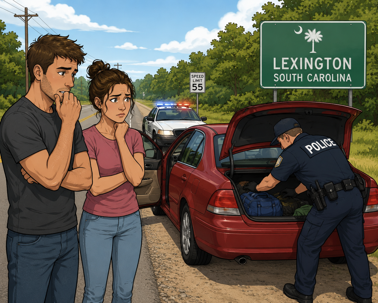
Drug charges can range from relatively minor misdemeanors to very serious felony offenses. The potential consequences depend on the specific drug involved, the quantity of that drug, an individual's prior criminal history, and the particular offense charged.
The Law Office of James R. Snell, Jr., has over 20 years of experience defending drug charges in Lexington, SC, as well as in Columbia and surrounding areas. We represent clients facing misdemeanor and felony drug charges in both state and federal court.
It can be confusing to determine exactly what a specific drug charge means. The following generally describes the major categories of drug offenses in South Carolina.
Possession
Possession is the offense of knowingly having an illegal drug or controlled substance in your possession. Possession can include both actual possession, such as drugs found in your hand or pocket, and constructive possession.
Constructive possession can involve drugs that are not physically on the person but are in a place where the State alleges the person had the ability and intent to exercise dominion and control over them. This issue frequently arises when drugs are found in a home or vehicle occupied by more than one person.
In either situation, possession requires knowledge of the drugs as well as the ability and intent to exercise "dominion and control" over them. The fact that drugs are found nearby does not necessarily mean that everyone present is legally in possession of them.
Possession with Intent to Distribute (PWID)
Possession with Intent to Distribute, commonly called PWID, is a higher-level possession charge. It involves possession combined with evidence that the drugs were intended to be transferred, distributed, or sold.
Law enforcement may bring a PWID charge based on the quantity of drugs involved. Police and prosecutors may also rely on other evidence, such as packaging materials, scales, cash, text messages, or other circumstances they contend demonstrate an intent to distribute.
Trafficking
Trafficking is among the most serious drug charges under South Carolina law. Unlike a distribution charge, there does not necessarily have to be evidence that the drugs were actually sold or were intended to be sold. Trafficking charges can be based simply on possession of a quantity of drugs that meets the statutory trafficking threshold.
The weight required for trafficking varies depending on the particular drug involved. Differences between the initial weight estimated by law enforcement and the weight later determined by a drug laboratory can also become an important issue in trafficking cases.
Because trafficking offenses can carry severe penalties, including mandatory prison sentences in some circumstances, the particular substance, alleged weight, and accuracy of the State's testing can be especially important.
Distribution
Distribution generally involves the actual transfer or sale of illegal drugs. Distribution charges frequently arise from controlled purchases involving confidential informants or undercover law enforcement officers.
These cases can raise issues concerning the identification of the person allegedly involved, the reliability of a confidential informant, audio or video recordings, surveillance, the handling of alleged drugs, and whether law enforcement can prove that a particular transaction actually occurred as alleged.
Possible Outcomes for Drug Offenses
There are several ways a drug charge in Lexington, SC may ultimately be resolved. Depending on an individual's prior criminal history, prior history of drug offenses, the evidence in the case, and willingness or ability to stop using drugs, charges may sometimes be reduced or dismissed.
Dismissal
A drug charge can potentially be dismissed when there are problems with the State's evidence or prosecution of the case. This can include an illegal search or seizure, problems establishing possession, problems with laboratory testing or the chain of custody, unavailable evidence or witnesses, or other legal and evidentiary issues.
In appropriate cases, charges may also be dismissed following successful completion of an approved diversion program.
Diversion
Some drug offenses may be eligible for Pre-Trial Intervention (PTI). Eligibility depends on the particular charge, criminal history, prosecutorial approval, and other requirements. Some felony-level drug offenses may be eligible for referral.
Successful completion of PTI can result in dismissal of the charge. Depending on eligibility and applicable South Carolina law, the record of the arrest may then be eligible for expungement.
For more serious cases involving a significant history of substance abuse, drug court may also be an option. Drug court is a comprehensive program and can be difficult to complete. It typically involves substantial supervision, drug testing, treatment, and other requirements. Depending on how a particular case is resolved, successful completion can potentially result in dismissal of the charge and eligibility for expungement. Drug court may also be used as a condition of probation in some cases.
A conditional discharge is another possible resolution for certain eligible drug charges. It is similar in some respects to a diversion program and in other respects to a plea. Generally, the defendant enters a plea but, upon successful completion of the required conditions, the proceedings may be discharged without a judgment of guilt. The charge may then be eligible for expungement. Conditional discharges may be available in many magistrate or municipal courts for simple possession of marijuana charges.
A conditional discharge can be a good resolution in an appropriate case, particularly for someone who can successfully comply with drug testing and other conditions and who does not want to use PTI eligibility that might otherwise be available.
Plea Agreement
Individuals facing drug charges may be offered a reduction in the charge or a reduced sentence in exchange for a guilty plea. A negotiated resolution may involve reducing the level of the offense, reducing the alleged drug weight, dismissing related charges, or agreeing to a particular sentence, such as time served or probation.
Whether a plea agreement is appropriate depends on the evidence, available defenses, potential penalties, criminal history, and the terms being offered.
Trial
Any drug charge in South Carolina can be contested in court. Before or during trial, the defense may raise legal challenges concerning searches and seizures, statements to law enforcement, laboratory testing, chain of custody, or the admissibility of other evidence.
If the case proceeds to trial, the State has the burden of proving the charged offense beyond a reasonable doubt. Depending on the court and offense involved, guilt may be determined by a judge or jury. A trial provides the opportunity to challenge the State's witnesses and evidence and require the prosecution to prove every required element of the alleged offense.
Penalties for Drug Charges in South Carolina
Penalties for drug offenses can vary substantially from case to case. The exact potential punishment depends on many factors, including the type of drug involved, the quantity or weight, the specific offense charged, the number and type of prior qualifying drug convictions, and whether the case is prosecuted in state or federal court.
Different substances can carry very different penalties. Marijuana, cocaine, methamphetamine, fentanyl, prescription controlled substances, and other drugs are governed by different provisions of South Carolina law. The quantity involved can also make an enormous difference. In some cases, increasing drug weight can change an allegation from possession to PWID or trafficking and substantially increase the possible punishment.
Prior convictions can also increase the potential penalties for some drug offenses. A charge that carries one range of punishment as a first offense may carry substantially greater consequences when prosecuted as a second or subsequent offense.
Trafficking charges are particularly serious because South Carolina law establishes weight thresholds for different controlled substances and can provide for substantial mandatory prison sentences. For this reason, determining exactly what substance was seized, how it was weighed, how it was tested, and whether the State can establish possession can be critical.
Federal drug charges involve a separate system of statutes and sentencing rules. A person charged federally may face substantially different procedures and potential penalties than someone prosecuted for a similar offense in South Carolina state court.
Defenses to Drug Charges
There can be many possible defenses and legal challenges to a drug charge. The appropriate defense depends on the facts and evidence involved in the particular case.
Potential issues can include whether police improperly searched a vehicle, home, or person; whether police had a lawful basis to stop a vehicle; whether statements were obtained in violation of applicable constitutional protections; whether there is sufficient evidence of actual or constructive possession; whether the alleged substance was properly tested and identified as an illegal drug; whether the drugs actually belonged to someone else; and whether there was a mistaken identification, particularly in a distribution case.
When multiple people had access to a vehicle, home, hotel room, or other location where drugs were discovered, an important issue may be whether the State can actually establish that a particular person knowingly possessed the drugs.
The chain of custody can also become important. The prosecution must be able to establish the handling and identity of evidence from the time it is seized through testing and its presentation in court. Laboratory testing, drug weight, and the identification of the substance can also be challenged when appropriate.
Mitigation in Drug Cases
Not every favorable outcome depends on establishing a technical legal defense. In appropriate cases, mitigation presented to the prosecutor or court can also play an important role in obtaining a reduction, diversionary resolution, or favorable sentence.
Mitigation may include a lack of prior criminal history, a strong employment history, family responsibilities, voluntarily seeking drug treatment or counseling, successful drug testing, community support, or other circumstances demonstrating why a particular resolution would be appropriate.
For someone struggling with drug use, voluntarily beginning appropriate treatment before the case is resolved can sometimes be particularly important. Treatment can address the underlying problem while also providing the prosecutor or court with evidence that the individual is taking the situation seriously.
Charged With a Drug Offense in Lexington, SC?
The appropriate strategy for a drug charge depends on the particular drug involved, its alleged quantity, the circumstances surrounding the arrest or investigation, how the evidence was obtained, the individual's criminal history, and the available options for resolving the case.
The Law Office of James R. Snell, Jr., represents individuals facing possession, PWID, trafficking, distribution, and other drug charges in Lexington, Columbia, and surrounding areas. We also represent clients facing serious felony drug charges in state and federal court.
To discuss a drug charge with our office, call (803) 359-3301. Same-day appointments are typically available.
Every criminal case is unique, and the available defenses, potential penalties, and possible outcomes depend on the specific facts and circumstances involved. Prior results obtained by an attorney in one matter do not indicate that similar results can be obtained for other clients in other matters.