
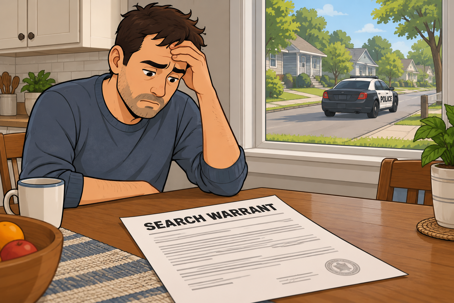
How should you respond if law enforcement has just served a search warrant at your home and taken telephones, computers and other electronic devices?
Try to stay calm. Experienced help is available. If police have a search warrant for your phone or computer, you do not have to face the situation alone. A criminal defense lawyer can answer your questions, protect your rights, and help you understand what comes next.
Speak with a lawyer before discussing the investigation. Do not answer questions about the allegations or discuss the facts with anyone else until you have met with a criminal defense attorney. If you have already spoken with police, there is still reason to seek help before making any further statements.
Treat this as an urgent legal emergency. Do not wait for an arrest to get advice. The Law Office of James R. Snell, Jr., LLC, offers free, confidential initial consultations. Call (803) 359-3301. Same-day appointments are typically available.
For many people, the first sign of an investigation into sexual exploitation of a minor is an unexpected visit from law enforcement. Officers arrive with a warrant to search the home and seize phones, computers, tablets, and other electronic devices. They may be investigating what has traditionally been called child pornography, which authorities now commonly call Child Sexual Abuse Material, or CSAM.
There may be numerous officers present, including officers wearing body armor and carrying rifles. The scene can feel like a SWAT operation. You may worry about your family, your job, and whether you will be arrested. Feeling frightened or overwhelmed is understandable. What matters now is taking steps to protect yourself and getting reliable legal advice.
Devices that are taken pursuant to a search warrant will be taken by police for forensic evaluation. Law enforcement technicians will attempt to access the devices and search through their contents looking for evidence of illegal images and videos. This process can sometimes take days, weeks, or even several months. Devices that do not contain illegal content may be returned once cleared by law enforcement. Any illegal content located can serve as the basis for an arrest warrant or additional criminal charges.
Our firm represents people in Lexington, Columbia, and throughout South Carolina facing sexual exploitation charges and other investigations involving the Internet Crimes Against Children, or ICAC, task force. We have met with, advised, and represented hundreds of clients in these situations. We understand how difficult that first phone call can be.
Many investigations begin with an internet cybertip about a suspected illegal image or video uploaded or transferred online. Online services can report suspected child sexual exploitation to the National Center for Missing & Exploited Children, which makes reports available to the appropriate law enforcement agencies. An investigation may involve email, Snapchat, Facebook, X, Kik, or other services. Investigators also investigate activity on peer-to-peer file-sharing networks.
A cybertip is an investigative lead, and a search warrant authorizes the search described in it. Neither is a finding that you are guilty. Questions about who used a device, who controlled an account, and what someone knew may be important. Those questions require careful review of the evidence.
During a search, officers may try to interview everyone present. They may ask who owns a computer, who knows its password, or who downloaded particular files. Even questions that sound routine can help investigators connect someone to an account, device, image, or video.
It is natural to want to explain yourself immediately. You may believe that answering questions will clear up a misunderstanding or persuade officers to leave. But a stressful conversation at your home is a difficult setting in which to understand the legal importance of every answer. Guessing or giving an incomplete explanation can create problems that are hard to correct later.
You can calmly say, “I am choosing to remain silent. I want to speak with a lawyer before answering questions about this investigation.” Do not lie, argue, or physically interfere with the search. Follow lawful safety instructions. Choosing not to answer investigative questions is different from obstructing officers executing a warrant.
Do not assume that your statements cannot be used simply because no one has read you your rights. Miranda warnings generally concern questioning while a person is in custody; they are not required before every police conversation. Let your attorney review how any questioning occurred.
If you already answered questions, your situation is not hopeless. Tell your attorney what you remember being asked and what you said. The circumstances and content of the interview deserve careful review. Before returning an investigator’s call or trying to clarify an earlier answer, get legal advice.
Until you meet with counsel, avoid discussing the facts through texts, social media, or conversations with friends, relatives, or coworkers. Those communications may become evidence. Do not delete files, reset devices, close accounts to remove evidence, or ask anyone else to do so. Do not copy or forward suspected illegal material, including to a lawyer. Ask the attorney how evidence can be reviewed lawfully.
Your initial consultation gives you time to explain exactly what happened and ask your questions. Bring the warrant, any property receipt, and the investigators’ contact information if you have them. You do not need to know the legal terminology or have every answer before calling.
An attorney can explain the laws that may apply to internet images or videos, including South Carolina’s sexual exploitation statutes. The lawyer can also help determine whether local or state authorities, federal authorities, or multiple agencies are involved. South Carolina’s ICAC task force works with agencies at several levels, so its involvement alone does not answer that question.
If no arrest has occurred, our attorneys can contact law enforcement on your behalf to seek information about the investigation’s status. If an arrest warrant is issued, we can request a negotiated turn-in. When authorities agree, this may help avoid another unexpected visit to your home or workplace. The arrangement is not guaranteed, but having counsel involved can help you prepare. Representation during an investigation can sometimes help an arrest from being made, or can help decrease the likelihood of a conviction if charges are brought.
Getting help early gives you someone to turn to as questions arise. Our role is to examine the evidence, evaluate possible defenses and legal challenges, and fight to protect your rights and future. You deserve clear answers and a defense based on the circumstances of your case.
If police have searched your phone or computer in Lexington, Columbia, or elsewhere in South Carolina, call the Law Office of James R. Snell, Jr., LLC, at (803) 359-3301. Initial consultations are free and confidential, and same-day appointments are typically available. You do not have to face this situation alone.
This article provides general information, not legal advice for a specific situation. All cases are unique. Prior results obtained by an attorney in one matter do not indicate that similar results can be obtained for other clients in other matters.